
Article Summary: Local SEO service pages help small businesses rank for location-based searches by clearly showing what services they offer and where they provide them. Strong pages use local keywords, unique content, customer reviews, consistent business information, internal links, and mobile-friendly design to improve visibility, attract qualified leads, and support a Google Business Profile.
Deep Dive with AI
Addressing the Core Question: Why Local SEO Service Pages Matter
Local search engine optimization helps businesses connect with customers searching for services in their specific geographic area. These dedicated service pages are essential because they allow search engines to understand the unique offerings your business provides at particular locations. When you create targeted content for each service area, you're giving potential customers exactly what they need to find you online.
Service pages directly impact your search engine rankings by incorporating local keywords and relevant content that matches user intent. This focused approach builds trust with your local audience while improving your online visibility. By maintaining NAP consistency and developing comprehensive service pages, small businesses can drive growth and increase conversions in their target markets.
What Are Local SEO Service Pages?
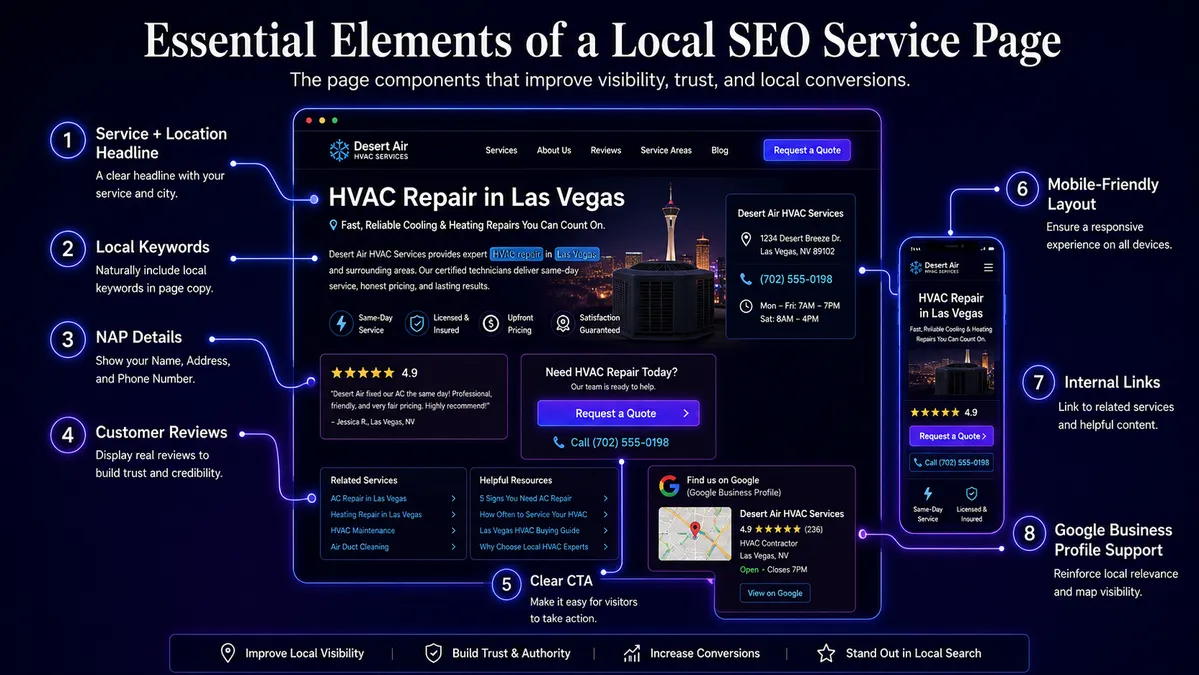
Local SEO service pages are dedicated web sections designed to help search engines understand your business and connect you with local customers. These pages highlight your services within a specific location, making them crucial for your online presence. When you optimize service pages with relevant keywords and location details, you improve your local search rankings significantly.
For example, a plumbing services page for your area helps potential customers find you through Google search and Google Maps. Effective local SEO strategy includes building local citations, maintaining consistent business info, and creating specific content that targets your service area. This approach attracts targeted traffic from people actively looking for your services nearby, ultimately boosting your visibility in the local market.
Understanding Service Area Pages
Service area pages help search engines understand where your business operates. These pages target specific geographic locations and include location-based keywords that boost your higher local ranking. By clearly listing your service area and phone number on your business website, you build trust with potential customers searching in those regions.
How Service Pages Differ From Standard Website Pages
Service pages focus on specific offerings and target customers searching for particular solutions. Unlike standard website pages that provide general company information, service pages use specific keywords and local terms to help search engines understand what your business offers in a specific region.
They're optimized for mobile devices and emphasize how your services solve problems for potential customers in your area.
Service pages are only one type of page a small business can use to strengthen its website. Other useful formats include listicle pages, which organize recommendations, examples, or comparisons into an easy-to-scan list, and how-to pages, which guide visitors through a specific task or problem step by step. Businesses can also use FAQ pages, location pages, product pages, landing pages, case studies, and supporting blog articles. Each page type serves a different purpose, but they work best when they are connected through internal links and support the business’s main service pages.
The Role of Service Pages in Your Overall SEO Strategy
Service pages work together with your overall local SEO efforts to build a stronger online presence. These pages help search engines understand your business and connect you with potential customers searching for specific services. Consider implementing these essential components:
- Optimize for local keywords related to your services
- Create great content that answers customer questions
- Ensure mobile optimization for better user experience
- Include customer reviews and testimonials
When you combine service pages with technical SEO and content marketing strategies, you establish credibility in your local pack results and improve local traffic significantly.
The Critical Importance of Service Pages for Local Search Visibility
Service pages help search engines understand what your business offers in your specific local area. When potential customers search for help nearby, these pages connect them directly to your solutions. Well-structured service pages with clear information about your offerings, pricing, and local availability build trust with your target audience.
This targeted approach strengthens your user experience and makes it easier for people to find exactly what they need. Professional local SEO services optimize these pages with relevant keywords and content creation strategies that match how people actually search. Responsive design ensures your content looks good on all devices, which matters since most searches happen on phones and tablets.
Capturing Local Search Intent
When potential customers search for services in their area, they use specific words tied to location and need. Service pages help search engines understand exactly what you offer and where. These dedicated pages capture local search intent by matching how people actually talk about your services. Visual content and customer reviews on service pages build trust with potential customers exploring your offerings in the digital landscape.
Dominating Local Search Results
Service pages paired with strong local SEO strategies help search engines understand your business offerings and physical location. When optimized properly, these pages rank higher in local searches, connecting you with nearby customers actively seeking your services. Quality website content combined with customer reviews builds credibility and drives conversions in your area.
Establishing Geographic Authority
Service pages that clearly describe what your business offers help search engines understand your geographic focus and expertise. When you optimize these pages with location-specific details and customer reviews, you build credibility within your area. This approach strengthens your local business listings and establishes trust with potential customers searching for services nearby.
How Service Pages Improve Your Local SEO Performance
Service pages significantly boost your local SEO performance by targeting specific offerings in your area. These pages help search engines understand what services you provide and where you offer them, making your business easier to find for local customers. Well-structured service pages improve user experience by answering customer questions directly and providing clear information about what you do.
Strong service pages work alongside your Google Business Profile to strengthen your local presence. Consider including these elements:
- Detailed service descriptions with location-specific keywords
- Customer reviews highlighting your expertise
- Clear calls to action for local customers
- Links to relevant blog posts that build authority
When local businesses optimize their service pages, they create multiple entry points for potential customers searching for help. This approach helps local SEO performance grow naturally as search engines recognize your relevance to community needs.
Increasing Your Local Search Rankings
Service pages help search engines understand your business location and offerings. They create dedicated content that targets local search queries. When you optimize these pages with location-specific keywords, your Google Business Profile becomes more visible to nearby customers. Customer reviews on these pages boost credibility and rankings.
Strong user experience through clear service descriptions encourages people to contact you. Online directories linking to your service pages amplify local search authority further.
Targeting Multiple Service Areas Effectively
Creating service pages for each location helps search engines understand your business serves multiple areas. This approach gives local businesses dedicated content that targets specific neighborhoods or cities. Your Google Business Profile improves when service pages focus on unique local details.
Strong user experience on these pages increases engagement and attracts more qualified leads in each service area.
Building Relevance for Specific Geographic Regions
Service pages targeting specific locations build relevance by connecting your business to community needs. When you create localized content addressing regional concerns, your Google Business Profile gains authority for that area. Meanwhile, customer reviews on location-specific pages strengthen trust.
This approach helps local businesses appear prominently in regional searches where your target audience actually searches.
Essential Elements for Effective Local SEO Service Pages
Your Google Business Profile serves as the foundation for local SEO success. This listing helps your business appear in Google Maps and local pack results, making it essential to optimize every detail. Beyond your profile, customer reviews build credibility and signal trust to search engines. The more reviews you gather, the higher your rankings climb.
Consistent NAP information matters tremendously for local businesses. Your name, address, and phone number should match everywhere on your website and across directories. This consistency improves both search rankings and user experience for potential customers searching for your services. Strong local SEO focuses on creating genuine connections with your community through authentic interactions and reliable information.
Incorporating Local Keywords Strategically
Place local keywords naturally throughout your service pages to help search engines understand what you offer. Include location-specific terms within:
- Service descriptions and headings
- Meta titles and descriptions
- Body copy and headers
Your Google Business Profile should feature location keywords prominently. Balancing keyword placement with user experience ensures local businesses rank higher while maintaining readability for visitors seeking your services.
Creating Location-Specific Content That Converts
Tailoring your content to specific locations builds trust and relevance with your audience. Incorporate location names, local landmarks, and neighborhood details throughout your service pages to help visitors feel personally connected. Your Google Business Profile should showcase customer reviews that highlight local experiences, as these testimonials strengthen credibility.
A strong user experience with clear location information and easy navigation encourages conversions from local businesses seeking your services.
Optimizing Page Structure for Search Engines
Clear page structure helps search engines understand your content better. Your Google Business Profile should include organized service descriptions and consistent NAP information across all pages. Additionally, customer reviews strengthen your user experience and local credibility with search algorithms.
Building Social Proof and Credibility Signals
Customer reviews function as powerful social proof for local businesses. Positive feedback directly influences search engine rankings and builds trust with potential customers. Responding thoughtfully to reviews demonstrates your commitment to customer satisfaction, which strengthens your credibility and boosts local search visibility through active engagement.
The Relationship Between Service Pages and Google Business Profile
Service pages connect directly to your Google Business Profile, creating a seamless experience for customers searching locally. When potential customers find your business on Google, they expect detailed information about what you offer. These pages reinforce your profile by providing specific details about each service you provide.
This connection improves how Google understands your business and boosts your visibility in local searches. Strong service pages combined with an optimized Google Business Profile give customer reviews more context and credibility. The good news is that this integration happens naturally when you focus on clear, helpful content that serves both search engines and real people looking for your services.
Complementing Your Google Business Profile
Service pages work alongside your Google Business Profile to strengthen your online presence. While your profile provides essential business details, service pages offer deeper information about what you offer. This combination improves user experience for local businesses seeking specific solutions.
Consider these elements:
- Detailed service descriptions with local keywords
- Customer reviews highlighting specific services
- Clear calls to action linking back to your profile
This approach builds trust and keeps potential customers engaged across multiple touchpoints.
Creating Consistency Across Platforms
Matching your service page descriptions with your Google Business Profile information ensures a cohesive user experience. When local businesses maintain identical details across platforms, customer reviews become more credible and trust strengthens. Consistency in business hours, services offered, and contact information prevents customer confusion and improves search rankings.
Avoiding Duplication and Conflicts
When creating multiple service pages, ensure each page targets different keywords and geographic areas to prevent duplication. Conflicting information across pages damages your search rankings and confuses visitors. Maintain consistent NAP data while customizing content for unique locations. This approach strengthens user experience by delivering relevant, location-specific information that local businesses need to rank effectively in their service areas.
Mobile Optimization for Service Area Pages
Mobile devices now drive most online searches for local services. When potential customers search for your business on their phones, your service area pages must load quickly and display perfectly. A slow, poorly designed mobile experience frustrates users and damages your rankings with search engines.
Fast loading times matter tremendously. Every second of delay causes visitors to leave your site. Your service pages should feature clear calls to action, easy navigation, and readable text without excessive scrolling. Strong user experience on mobile devices keeps people engaged with your content and encourages them to contact you.
Additionally, customer reviews displayed prominently on mobile pages build trust and credibility with prospects browsing on the go.
Ensuring Responsive Design
Responsive design adapts your service area pages to fit any screen size, creating better user experience for mobile visitors. When pages display correctly on phones and tablets, customers can easily find your information and contact details. This matters because most local searches happen on mobile devices.
Testing your pages across different screen sizes ensures buttons are clickable, text is readable, and images load quickly. Fast loading times and smooth navigation keep potential customers engaged with your local businesses.
Improving User Experience on Mobile Devices
Mobile devices demand fast loading and intuitive navigation for better user experience. Consider these essential improvements:
- Streamline buttons and forms for touch screens
- Reduce page load times below three seconds
- Ensure readable text without zooming
Customer reviews build trust and credibility. Displaying testimonials prominently on mobile service pages encourages conversions and strengthens local businesses' reputations effectively.
Reducing Bounce Rates with Mobile-Friendly Layouts
Mobile-friendly layouts dramatically reduce bounce rates by ensuring fast load times and intuitive navigation on phones. When local businesses optimize their service area pages for mobile, visitors stay longer and explore more content. Customer reviews display prominently on responsive designs, building trust instantly.
This approach keeps potential clients engaged throughout their browsing experience.
Frequently Asked Questions
Should Each Service Area Have Its Own Dedicated Landing Page?
Yes, having separate landing pages for each service area helps customers find exactly what they need. Close to half of all Google searches look for local information, making location-specific pages valuable. Each dedicated page lets you target area-specific keywords and address local concerns directly.
This approach improves your visibility in local search results and helps potential customers in different areas discover your services more easily.
How Do I Incorporate Local Keywords Without Keyword Stuffing?
Use local keywords naturally throughout your content by focusing on questions customers ask and conversational language. Instead of repeating the same keyword, vary your phrasing and include related terms. For example, write "emergency plumber in your area" rather than stuffing "plumber" repeatedly.
Target long-tail keywords like "quick pest control services near me" that sound natural. Place keywords in headings, meta descriptions, and FAQ sections where they fit organically. This approach improves search visibility while keeping your content easy to read for both people and search engines.
Can Service Pages Help Me Rank in Multiple Locations?
Yes, service pages can help you rank in multiple locations. Create unique, location-specific landing pages for each branch on one central website. This approach consolidates domain authority while optimizing each location for local search. Use targeted keywords like "personal trainer in Islington N1" instead of generic terms.
Ensure consistent NAP information and manage reviews per location to boost rankings and engagement across all branches.
What Is the Ideal Content Length for Service Pages?
Service pages work best with 300-500 words of content. This length provides enough detail to explain your services clearly while keeping visitors engaged. Aim for concise paragraphs, use subheadings, and include relevant keywords naturally. Balance comprehensive information with readability to help potential customers understand what you offer quickly.
How Often Should I Update My Service Area Pages?
Update your service area pages quarterly or whenever your business changes. Add new keywords, refresh old content, and verify your information stays accurate. Search engines favor fresh, current content, so regular updates help you rank higher and keep customers informed about your services.
Do Service Pages Replace the Need for a Google Business Profile?
No, service pages don't replace your Google Business Profile. Your Google Business Profile listing is the foundation of local SEO for home service businesses. Service pages complement your profile by providing detailed information about your offerings, while your Google Business Profile helps you appear in Google Maps and local pack results.
Together, they create a stronger local search presence and improve your visibility with potential customers in your service area.
How Do I Handle Service Pages for Overlapping Geographic Areas?
When you serve multiple overlapping areas, create separate service pages for each location while maintaining NAP consistency across your website. Your name, address, and phone number should match everywhere to boost search credibility. Focus on hyper-localized content for each page, targeting long-tail keywords specific to each area.
This helps you rank better for local searches and capture high-intent customers asking detailed questions about nearby services.