Article Summary: Local SEO is how small businesses show up when customers nearby search for their services on Google Maps and in local search results. This guide covers everything from how Google ranks local businesses using relevance, proximity, and prominence, to keyword research, Google Business Profile optimization, NAP consistency, citation building, review management, on-page local SEO, and schema markup. If your business relies on local customers, this is the complete playbook for getting found before your competitors do.
Deep Dive with AI
What Is Local SEO and Why Does It Matter for Businesses
Local SEO is the practice of optimizing a business's online presence to attract customers searching within a specific geographic area. Unlike broad SEO, local search visibility focuses on connecting businesses with nearby searchers who have high purchase intent. Google's own data shows that 76% of people who search for something nearby on their smartphone visit a related business within a day.
At its core, local SEO works by helping Google understand where a business is located and what it offers through signals like NAP citations, local keywords, and a complete business profile. For local businesses, ranking higher in location-based searches directly translates to foot traffic and revenue growth.
How Local SEO Differs From Traditional SEO
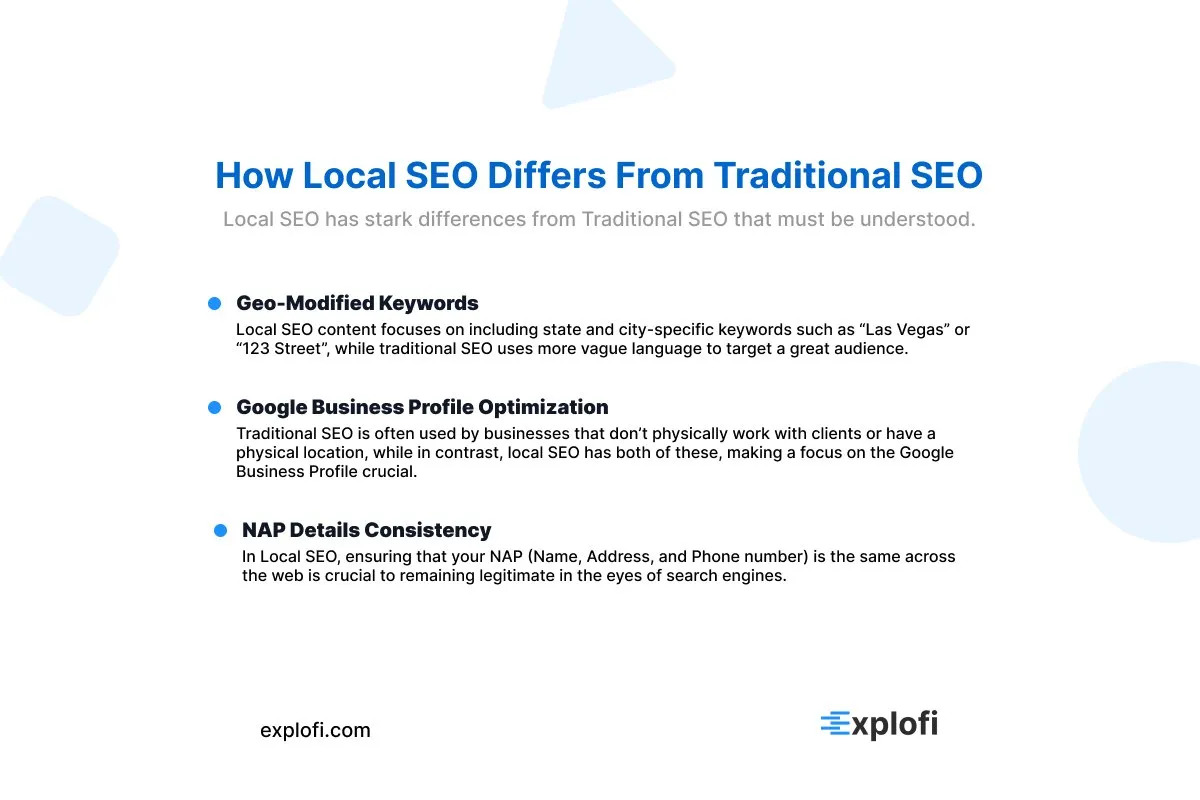
Local keywords and geographic signals sit at the core of what separates these two approaches. Unlike traditional SEO, which targets broad audiences across a larger area, a local SEO strategy prioritizes proximity, relevance, and prominence within a specific region. Google considers these three factors when ranking businesses in local packs.
BrightLocal research shows 98% of consumers searched online for local businesses in 2022, highlighting why local rankings demand a distinct approach:
- Geo-modified keywords
- Google Business Profile optimization
- NAP details consistency
The Role of Local Search in Modern Consumer Behavior
With 76% of people who search for something nearby visiting a business within a day, according to Google, local search has fundamentally reshaped how consumers make purchasing decisions. That intent-driven behavior means a local business must appear precisely when a nearby customer is searching, not just broadly online.
Google Maps results, for instance, capture users at peak decision-making moments, making local visibility directly tied to foot traffic and revenue conversion.
How Search Engines Process and Rank Local Results
Search engines process local queries through a layered algorithm that weighs local ranking factors like behavioral signals, citation consistency, and geographic relevance. When a user searches "mexican restaurants near me," Google cross-references local listings, google maps data, and structured business data simultaneously.
Specifically, NAP (Name, Address, Phone number) consistency across online directories accounts for a measurable portion of local rankings, with inconsistencies actively suppressing map pack rankings by fragmenting trust signals across the algorithm.
The Local Map Pack and How It Works
The local map pack displays the top three local businesses Google surfaces for a geo-intent query, pulling directly from verified Google Business Profile data. Businesses appearing here receive 44% of total clicks for local searches. Google ranks these results by cross-referencing business categories, review volume, and geographic proximity to determine which three listings rank higher.
Local Organic Search Results Explained
Local organic search results appear below the map pack and are governed by traditional ranking signals applied to a local context. Unlike map pack results, these listings rank based on:
- On-page optimization
- Local keyword relevance
- Backlink authority
Organic local results capture roughly 40% of clicks, making higher rankings through localized title tags and meta descriptions critically important for local business visibility.
How Google Determines Relevance, Proximity, and Prominence
Google weighs relevance by matching local keywords in your business profile to the searcher's intent, while proximity factors in the physical distance between the user and the local business. Prominence draws from online reviews, backlinks, and online mentions across authoritative sources.
Who Needs a Local SEO Strategy
Any local business that relies on foot traffic, service-area visibility, or regional clientele genuinely benefits from a local SEO strategy. Specifically, businesses like restaurants, law firms, dental offices, and home service contractors compete heavily for geo-intent searches. Studies show that 46% of all Google searches have local intent, meaning nearly half of search activity is an opportunity a business either captures or misses entirely.
Business directories like Yelp, Google Business Profile, and Bing Places serve as foundational touch points for this visibility. The businesses that tend to rank highly share one thing in common: their digital presence is structured around a specific local area, with consistent contact info, accurate opening hours, and verified customer reviews across multiple platforms.
Small and Mid-Sized Businesses That Benefit From Local Search
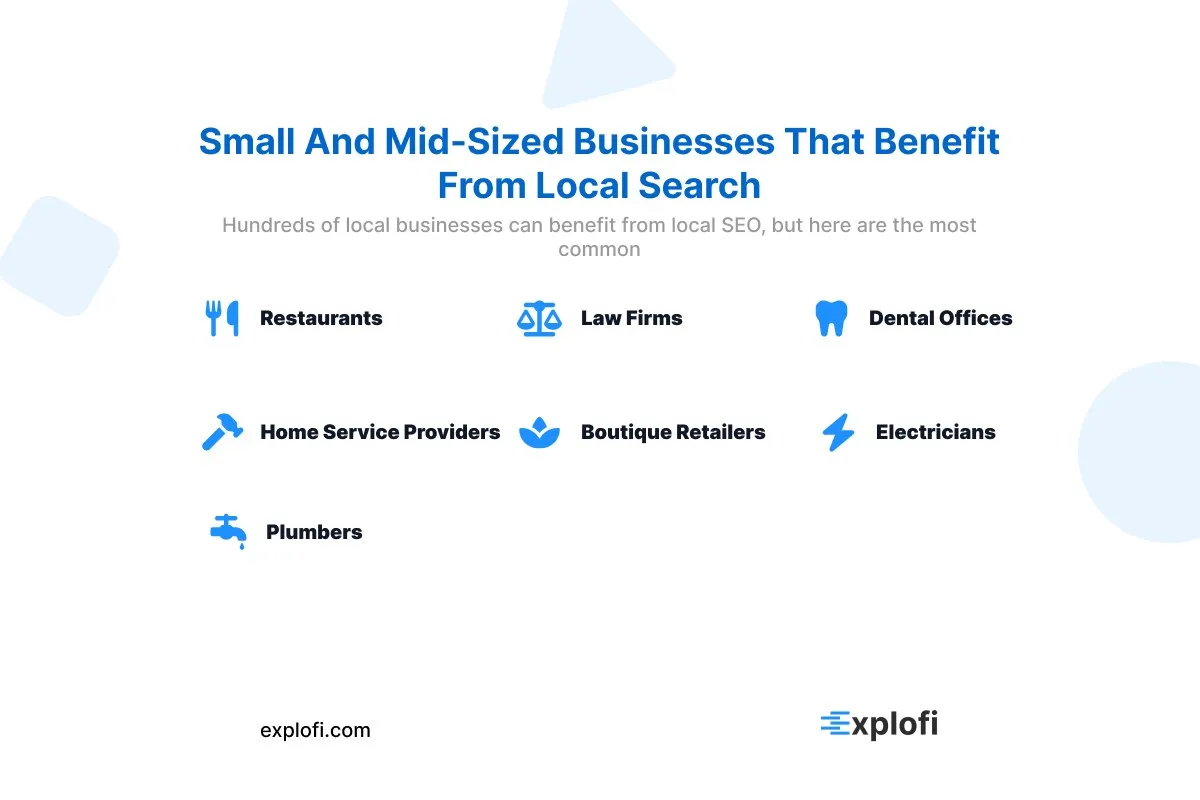
Restaurants, law firms, dental offices, and home service providers are among the business types that see the strongest return from local search visibility. A local business with a physical address or service area gains a direct edge when ranking for geo-intent queries, since 46% of all Google searches seek local information.
Plumbers, electricians, and boutique retailers especially benefit, as their target audience searches with immediate, location-driven intent.
Multi-Location Brands and Enterprise-Level Considerations
Managing local SEO across multiple locations means handling duplicate listings that dilute ranking authority, inconsistent phone number formatting across directories, and location-specific google reviews that require separate monitoring. Enterprises operating 10 or more locations face compounded citation drift, where each storefront accumulates conflicting data points over time.
A listing management tool becomes essential at this scale, syncing accurate data across popular directories simultaneously rather than manually auditing each profile.
Industries That Rely Most Heavily on Local Search Visibility
Healthcare, legal services, home services, and restaurants are among the industries where local search visibility directly determines revenue. A dental practice in a mid-sized city, for instance, lives and dies by its placement in local search results since 77% of patients use search engines before booking appointments.
Similarly, plumbers and HVAC contractors generate nearly 80% of their leads through local keywords tied to service areas, making strong local business presence non-negotiable for survival.
Conducting Effective Local Keyword Research
Targeting local keywords with geo-specific modifiers, like "plumber in Austin" versus just "plumber," captures searchers with purchase intent. Google Keyword Planner reveals exact monthly search volumes for these terms. Prioritize keywords by:
- Neighborhood level specificity
- Search volume above 100 monthly
- Transactional intent signals
How to Identify High-Intent Local Search Terms
Competitor search queries reveal what's already converting locally. Using Google Search Console, filter queries with city names, zip codes, or "near me" modifiers showing click-through rates above 3%. Terms combining service type plus location, like "emergency HVAC repair downtown," signal buyer-ready intent through their specificity:
- Urgency words ("emergency," "sameday")
- Price qualifiers ("cheap," "affordable")
Using Keyword Tools to Discover Location-Based Opportunities
Local SEO tools like SEMrush Local, Map Rank Tracker, and Explofi local keyword tracker filter keyword data by ZIP code, revealing hyper-local gaps competitors miss. These tools surface:
- Search volume by neighborhood
- Keyword difficulty scores
- Local keyword cannibalization conflicts
Analyzing SERPs to Uncover Local Keyword Gaps
Scanning SERPs page by page reveals which local keywords your competitors rank for but you don't, exposing exact gaps worth targeting. Look specifically for:
- Featured snippets answering local service questions
- Map pack results dominated by competitors
- "People also ask" boxes revealing untapped query variations
When a *local business* consistently appears in these three SERP features for a given term, that keyword represents a verified gap. Cross-referencing these findings with Google Maps visibility data sharpens which gaps carry the most commercial weight.
Optimizing Your Google Business Profile for Maximum Visibility
Completing your Google Business Profile fully increases visibility by up to 70%, according to Google's own data. To ensure your local business ranks competitively, focus on:
- Selecting the most precise primary category
- Uploading geotagged photos weekly
- Posting updates that include local keywords
Google's algorithm weighs profile completeness heavily, rewarding active profiles with stronger placement on Google Maps.
Essential Information to Include in Your Google Business Profile
Your phone number, address, and business hours must be exact and consistent across every platform, since even minor discrepancies can confuse Google's verification systems. Beyond the basics, your profile should include:
- A keyword rich business description using local keywords
- A precise business category selection
- High resolution photos updated regularly
Accurate category selection alone can lift Google Maps ranking placement, as it directly helps Google understand which searches your listing should appear in.
How to Keep Your Google Business Profile Active and Engaging
Posting Google updates at least once a week keeps your profile ranked higher in local search results, as Google's algorithm favors consistent activity. Responding to reviews within 24 hours, particularly negative reviews, signals trustworthiness and directly influences your local ranking position. A practical engagement checklist includes:
- Answer customer questions in the Q&A section
- Share promotional offers through Google posts
- Update business hours seasonally
Using Posts, Photos, and Updates to Boost Profile Performance
Regular posts and photos directly influence how Google ranks your profile. Uploading geotagged photos weekly and publishing Google Posts every 7 days signals activity to search engines. Businesses with more than 100 photos receive 520% more calls than those with fewer images, according to Google's own data.
Using local keywords within post captions and photo descriptions for maximum impact compounds this visibility effect significantly.
Building and Managing Local Citations
Local citations, which are mentions of your business name, address, and phone number across the web, directly affect how search engines work to rank your local business. Inconsistencies across even 10% of your listings can suppress rankings noticeably. Platforms to prioritize include:
- Yelp, Apple Maps, and Bing Places
- Industry specific directories
- Social media profiles
Moz Local research shows that citation accuracy correlates strongly with Google Maps placement, making structured audits essential.
What Local Citations Are and Why They Matter
A local citation is any online mention of your local business that includes your name, address, and phone number (NAP). Search engines like Google cross-reference these mentions across directories, social platforms, and review sites to verify your business's legitimacy. Research shows that citation consistency is a confirmed ranking factor in Google Maps results, meaning your NAP data must match precisely:
- Spelling
- Formatting
- Abbreviations
How to Conduct a NAP Audit for Consistency
Cross-referencing your listings manually against your website's NAP data is the most reliable starting point. Tools like Moz Local or BrightLocal scan hundreds of directories simultaneously, flagging discrepancies in your business's phone number, address format, or name variations. A structured audit typically covers:
- Your top 50 directory listings
- Social media profiles
- Data aggregators like Infogroup and Acxiom
Even a missing suite number can suppress your local business rankings on Google Maps.
Finding New Citation Opportunities Across Directories
Beyond the major platforms, niche and local business directories offer untapped citation opportunities that many competitors overlook. Sites like Foursquare, Hotfrog, and Chamber of Commerce directories frequently offer a free listing that passes real local link value. According to BrightLocal, businesses listed in 50+ directories rank measurably higher in local results.
Scanning competitor profiles using tools like Moz Local reveals exactly which directories they occupy that you do not.
Fixing Incorrect or Inconsistent NAP Information
When your phone number, address, or business name differs between listings, search engines treat those discrepancies as trust signals against your local business. Tools like Yext or BrightLocal can audit hundreds of directories simultaneously, flagging exact mismatches. Even a formatted difference like "St." versus "Street" registers as an inconsistency.
Prioritize correcting citations on high-authority platforms first, since those carry more weight in Google Maps ranking algorithms.
Encouraging and Managing Online Reviews for Local SEO
Reviews directly influence local business rankings, with BrightLocal's 2023 data showing that businesses with 4+ star ratings receive 92% more consumer trust signals than lower-rated competitors. Embedding a review link directly into post-purchase emails reduces friction, increasing review completion rates by up to 44%.
Effective review management involves responding to negative reviews within 24 hours, as Google's algorithm weighs owner responsiveness in Google Maps ranking signals. A structured approach includes:
- Requesting reviews via SMS with direct links
- Responding to all reviews publicly
- Flagging fake reviews through Google's review removal tool
Why Customer Reviews Are a Critical Local Ranking Signal
Reviews carry measurable weight in Google Maps ranking algorithms, specifically across three factors: review quantity, recency, and rating score. BrightLocal's research confirms that 98% of consumers read online reviews for local businesses before making a decision. Google's algorithm treats review velocity, meaning how frequently new reviews arrive, as a trust signal tied to business activity.
A steady inflow of genuine reviews signals to search engines that a local business remains credible and engaged.
Best Practices for Responding to Positive and Negative Reviews
Positive reviews deserve personalized acknowledgment, not generic "thank you" replies. Reference specifics the customer mentioned to signal authenticity. For negative responses, follow this structure:
- Acknowledge the issue directly
- Apologize without deflecting blame
- Offer a resolution publicly
Using local keywords naturally in responses can also strengthen your Google Maps visibility.
Strategies to Generate a Steady Stream of Authentic Reviews
Timing review requests strategically yields measurable results. Asking within 24 hours of a completed service captures peak customer satisfaction. Practical collection methods include:
- QR codes printed on business cards linking directly to your Google Maps profile
- SMS followups sent within one hour of service completion
- Loyalty program prompts triggered after repeat purchases
The FTC requires reviews reflect genuine experiences, making authentic, unprompted outreach methods legally essential for any local business.
On-Page SEO Techniques for Local Search Optimization
On-page optimization for local search requires embedding local keywords naturally into title tags, meta descriptions, H1 headers, and body content. Specifically, title tags should follow the format "Service + City" (e.g., "Plumber in Austin"), which aligns with how 46% of all Google searches carry local intent, according to Google's own search data.
Beyond keyword placement, schema markup plays a critical structural role, as LocalBusiness schema tells search engines exactly what your local business does and where it operates. Structured data like `addressLocality`, `telephone`, and `geo` coordinates give crawlers precise signals. Page load speed compounds these signals, given that 53% of mobile users abandon pages that take over 3 seconds to load.
Adding Location-Based Keywords to Key Website Pages
Location-based keywords embedded in service pages, about pages, and contact pages create geographic relevance signals Google's crawlers prioritize. Integrate local keywords into:
- URL slugs (e.g., `/plumbingservicesdenver`)
- Image alt text
- Body copy paragraphs
Neighborhood-level terms consistently outperform broad city targets.
Creating Location-Specific Landing Pages That Convert
Location-specific landing pages convert best when each page targets a unique geographic area with dedicated content, not duplicated text with swapped city names. Include a local phone number, neighborhood-specific service details, and embedded Google Maps to strengthen geographic relevance. Pages built this way see up to 58% higher conversion rates than generic service pages.
Structure each page with:
- Locally referenced testimonials
- Area specific service descriptions
- Location embedded calls to action
Optimizing Title Tags, Meta Descriptions, and Headers for Local Queries
Meta descriptions with local keywords see a 5.8% higher click-through rate than generic ones, according to Moz. Pairing a "Service + City" title tag format with a meta description that mirrors local search intent reinforces geographic relevance across both Google's crawlers and local business searchers, tightening the alignment between page structure and actual query behavior.
Implementing Structured Data and Schema Markup for Local Businesses
LocalBusiness schema markup, when properly implemented, tells Google's crawlers exactly how your business matches a searcher's local query. Using Schema.org's structured data format, you can specify:
- Business name, address, and phone number
- Operating hours and service areas
- Accepted payment methods and price ranges
Google's Rich Results Test confirms valid markup increases search visibility by surfacing enhanced listings.
Embedding Maps and Improving Internal Linking for Local Relevance
Embedding a Google Maps iframe directly into your contact or location page sends geographic relevance signals that reinforce your local business presence. Internal linking between service pages and location pages using anchor text that includes local keywords tightens topical relevance across your site.
A well-structured internal link network can improve crawl efficiency by up to 40%, according to SEO research.
How Explofi Helps Small Businesses Execute Local SEO Without an Agency
Understanding local SEO is one thing. Executing it consistently across every service page, blog post, and location page on your site is another.
Explofi is built for the execution layer. You enter your business type, location, and competitors and Explofi helps you create localized service pages, blog content, and topical maps built around what your local customers are actually searching for. Your Google Business Profile tells Google you exist. Your website content tells Google you deserve to rank above every competitor in your city.
Most small businesses know they need local SEO. Very few have a system that executes it consistently without an agency retainer. Explofi is that system.
Start free and see what your competitors are ranking for that you are not.
Frequently Asked Questions
What Is Local SEO In Simple Terms?
Local SEO is the process of optimizing your business's online presence so it shows up when customers nearby search for your services. Instead of trying to rank for broad national keywords, local SEO focuses on geographic-specific searches like "plumber in Austin" or "HVAC repair near me." The goal is to appear in the Local Pack on Google Maps and in organic search results for searches made by people in your service area. For small businesses that rely on local customers, local SEO is the single most important marketing channel because it connects you with buyers who are actively searching for what you offer right now.
How Long Does Local SEO Take To Show Results?
Local SEO typically shows initial results within 3 to 6 months for most small businesses. Google Business Profile optimizations can produce ranking movement in 4 to 8 weeks because Google is evaluating an existing profile rather than building trust in a new domain. Content-based local SEO including service pages and blog posts targeting local keywords takes longer because Google needs time to crawl, index, and evaluate the new content against competitors. The more competitive your local market is the longer the timeline. Businesses in smaller cities or less saturated service categories often see results faster than those competing in major metropolitan areas.
What Is NAP Consistency And Why Does It Matter For Local SEO?
NAP stands for name, address, and phone number. NAP consistency means your business information is identical across every online directory, social media profile, and citation source. Search engines like Google cross-reference your business details across hundreds of platforms to verify your legitimacy. When your address is formatted differently on Yelp versus your Google Business Profile, or your phone number uses a different area code format on Apple Maps, Google treats those inconsistencies as trust signals against your business. Inconsistent NAP data is one of the most common reasons local businesses fail to rank in the Local Pack even when they have good content and reviews.
Do I Need A Website To Rank In Local SEO?
You can rank in Google Maps and the Local Pack without a website by optimizing your Google Business Profile alone. However, having a website significantly strengthens your local SEO performance because it gives Google additional signals about what your business does, where it operates, and who it serves. A website with localized service pages, blog content targeting local keywords, and schema markup reinforces the same signals your Google Business Profile is sending. Businesses with both a fully optimized profile and a content-rich website consistently outrank those relying on their profile alone in competitive local markets.
What Is The Difference Between Local SEO and Google Business Profile Optimization?
Google Business Profile optimization is one component of local SEO, not the whole thing. Your Google Business Profile controls how you appear in Google Maps and the Local Pack. Local SEO is a broader strategy that also includes your website's on-page content, local keyword targeting, citation building across directories, review management, backlink building, and structured data markup. Optimizing your profile gets you into the Local Pack conversation. The rest of your local SEO strategy determines whether you win it. The businesses that dominate local search in competitive markets have both a fully optimized profile and a website with strong localized content working together.
How Do I Rank Higher in Google Maps?
Ranking higher in Google Maps comes down to the three signals Google uses for local rankings which are relevance, proximity, and prominence. You improve relevance by choosing the most specific primary business category, writing a keyword-rich business description, and listing detailed services. You cannot control proximity but you can maximize it by ensuring your address is correct and your service area is defined precisely. You build prominence by generating consistent new reviews, responding to every review quickly, maintaining NAP consistency across all directories, uploading photos regularly, and building your website's local authority through content and backlinks. Consistently doing all of these things over time is what separates the businesses in the top three map results from everyone else.