
Article Summary: Local SEO software helps small businesses show up when customers nearby search for their services on Google Maps and in local search results. This guide covers what local SEO software is, why it matters, the key features to look for, the best free tools to start with, and the top paid platforms worth considering. It also covers how Explofi fits into the local SEO software category as the execution layer that turns local search insights into published content that ranks without an agency retainer.
Deep Dive with AI
What Is Local SEO Software?
Local SEO software is a specific set of tools designed to enhance how a business shows up in location-based search results on platforms such as Google Search and Google Maps. These tools usually manage:
- Optimizing a business's Google Business Profile
- Tracking local rank
- Building citations
- Managing reviews
- Analyzing competitors
Google's local algorithm ranks businesses based on relevance, proximity, and prominence, making each of these functions crucial. With 46% of all Google searches having a local intent, local SEO tools provide businesses with a structured way to compete for high-visibility placements like the local map pack.
Why Local SEO Software Is Essential for Business Growth
Local businesses that overlook local SEO software risk losing customers to their competitors. Studies show that 92% of people choose businesses from the first page of local search results, so being visible can boost your revenue. Local rank tracking and competitor analysis tools help you see how your business ranks against others in real time.
These tools are especially useful because they manage your online presence across different platforms like Google Maps, Yelp, and other directories all at once. Additionally, having a complete Google Business Profile makes your business seem more trustworthy to customers, as they are 2.7 times more likely to consider a business reputable if it has a full profile on these platforms.
Therefore, optimizing through these tools is crucial for growth.
The Shift Toward Local Search Behavior
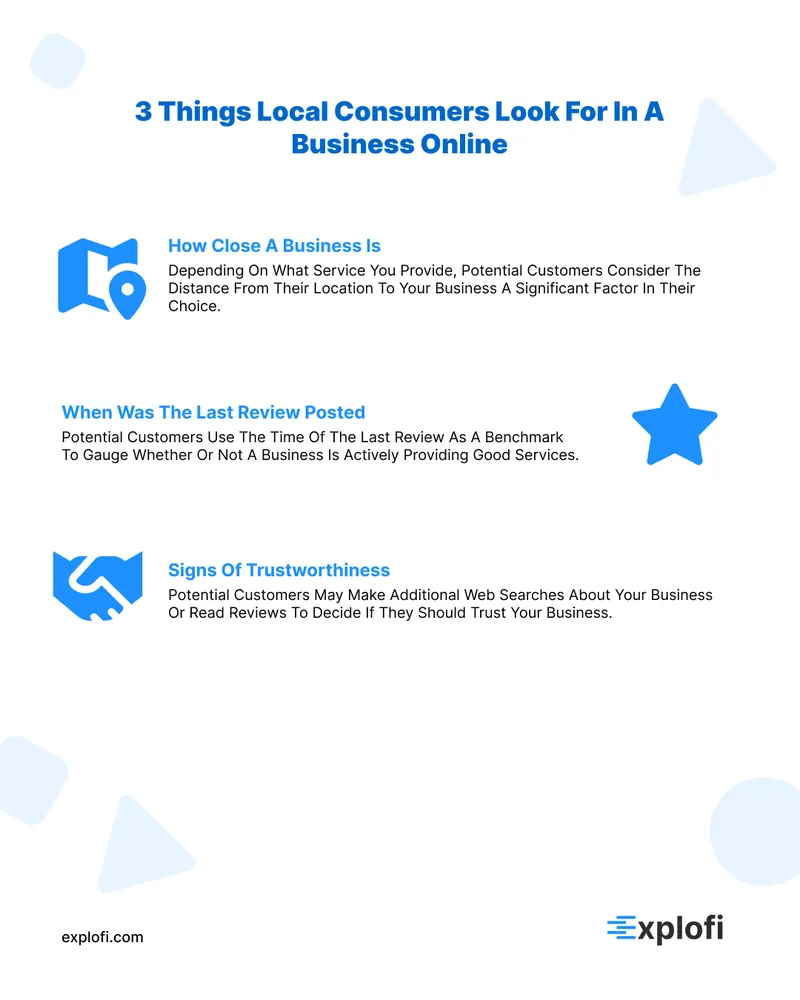
78% of mobile searches for nearby businesses lead to an offline purchase, showing how much local search habits have changed. Today's consumers consider:
- How close a business is
- When the last review was posted
- Real-time signs that show if a business can be trusted
More than 46% of all Google searches are looking for local information, so having good local visibility is very important.
How Local SEO Software Simplifies Complex Tasks
Local SEO software combines several important tasks into one easy-to-use dashboard, which includes:
- Citation building: This helps ensure your business is listed correctly across various websites.
- Review monitoring: It keeps track of customer feedback and ratings for your business.
- Performance tracking: This monitors how well your local search presence is doing.
Software like Moz Local can automatically remove duplicate listings to keep your information consistent. Meanwhile, Local Falcon provides a visual map that shows how your business ranks in different areas, saving you hours of manual research.
The Competitive Advantage of Using Dedicated Tools
Specialized local SEO tools offer a significant advantage, particularly because 87% of people use Google Search to look for local businesses. Functions such as competitor insights and review tracking simplify tasks that could otherwise take many hours of manual work.
Key Features to Look for in Local SEO Software
When choosing local SEO tools, certain features can make a big difference between just okay software and truly powerful options. According to Whitespark's Local Search Ranking Factors survey, managing Google Business Profiles is crucial as it significantly impacts local pack rankings. Here are some key features to look for:
- Local rank tracking with geogrid visualization
- Citation building and automated cleanup
- Review monitoring across multiple platforms
- Detailed analytics covering traffic, conversions, and local rankings
- Scalability for agencies managing multiple clients
Effective review management is important because the software should be able to track responses on various directories at once. Tools like BrightLocal start at $39 per month and include geo-grid rank tracking, while Semrush Local begins at $20 per month per location for listing management.
Google Business Profile Management
NAP (Name, Address, Phone Number) consistency is crucial because 80% of customers don't trust businesses that have incorrect or mixed-up contact information. Proper management of a Google Business Profile involves:
- Updating multiple locations at once
- Monitoring reviews
- Verifying the profile
- Tracking performance
Local Rank Tracking and Grid Maps
Grid maps help you monitor your Google Maps ranking at various GPS locations, showing areas where competitors might be drawing customers away from you. Tools such as Nightwatch (priced at $32 per month) provide:
- Adjustable grid sizes ranging from 3x3 to more than 7x7
- The ability to scan multiple keywords
- Automated regular scans
Citation and Listing Management
Listing management tools can synchronize your business data across more than 150 platforms using just one dashboard, significantly reducing the need for manual work. Incorrect or duplicated listings can be detrimental because:
- 52% of negative reviews are due to inaccurate information on these listings
Review Generation and Reputation Management
Customers consider online reviews just as valuable as personal recommendations, which highlights the importance of reputation management in local SEO strategies. When choosing a tool, look for options that include:
- Automated SMS or email requests for reviews
- Sentiment analysis to understand customer feelings about your business
- AI-generated response templates
- Monitoring across multiple platforms for reviews
Local Keyword Research Capabilities
Strong local keyword research tools help find both direct search terms such as "plumber in Chicago" and indirect ones like "emergency plumber." This is important because 46% of all Google searches have a local purpose. These tools cover:
- Queries that involve making a purchase or getting a service, known as transactional queries
- Queries seeking information about something, called informational queries
- Queries where people are trying to find a specific website or business, referred to as navigational queries
Multi-Location Support and Reporting
Each place must have its own unique web address (for example, /locations/place-name/) that search engines can include in their indexes. Meanwhile, a central control panel should provide:
- A way to track how each location ranks on search engines
- Tools to compare performance across different locations
- Features to monitor changes for maintaining brand consistency
AI-Powered Insights and Automation
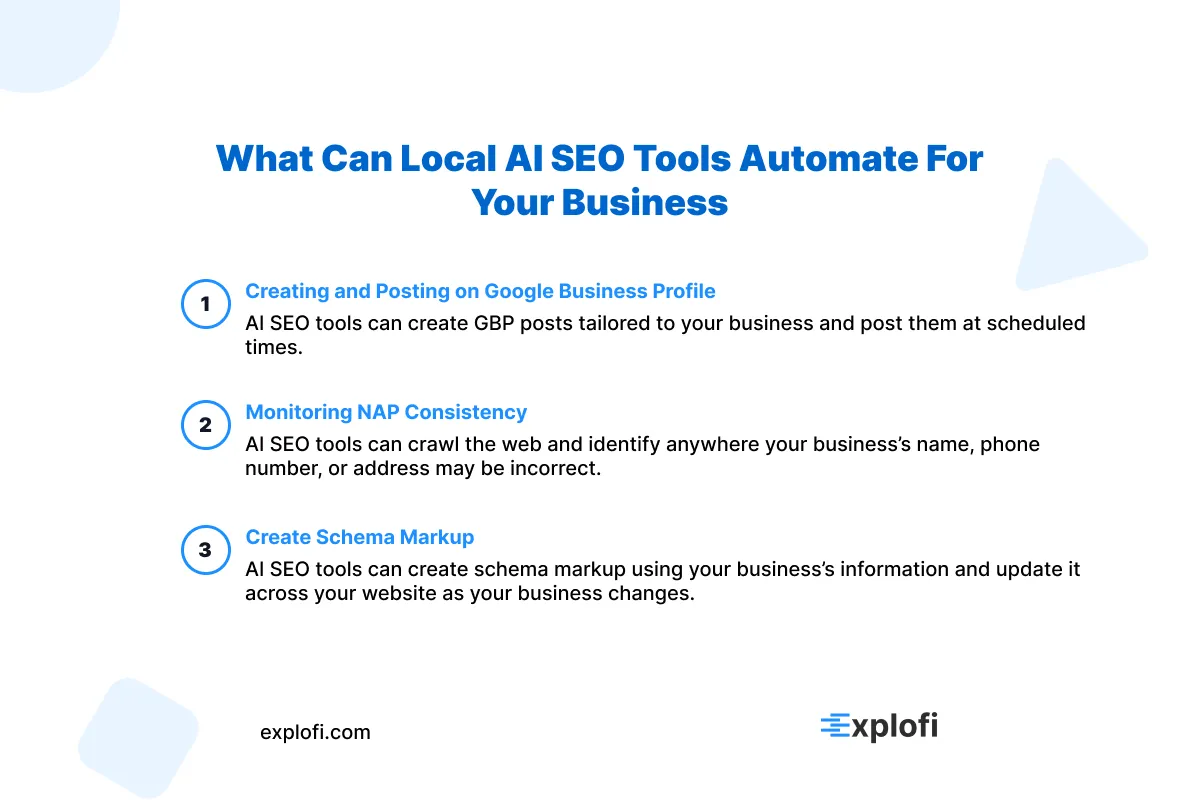
AI can automate several routine local SEO tasks such as:
- Managing GBP (Google Business Profile) posts
- Checking for NAP (Name, Address, Phone number) consistency
- Optimizing Schema markup
Tools with powered insights use sentiment analysis to examine customer feedback and pinpoint what drives satisfaction. They also provide useful ranking data across different platforms.
Free vs. Paid Local SEO Software
Free local SEO tools such as Google Search Console, Google Business Profile, and Whitespark's Review Checker offer small businesses a basic way to enhance their local online presence. However, these free options have limitations compared to paid alternatives.
- Free tools provide simple review monitoring, ranking checks, and search visibility insights.
- Paid tools like BrightLocal ($29/month) or SEMrush Local ($30/location/month) include automated listings management, competitor rank tracking, and AI-powered review responses.
For businesses with multiple locations, using paid local SEO tools is more practical. Managing business listings across 150+ platforms manually through free tools would be nearly impossible at scale.
What Free Tools Can and Cannot Do
Free local SEO tools are useful for simple tasks but have limitations quickly. Google Search Console helps monitor how visible your website is in searches, and Google Business Profile handles managing reviews. However, these tools do not:
- Keep track of local rankings across different locations
- Automate the management of reviews on a large scale
When to Invest in a Paid Local SEO Platform
Paid platforms are a good choice if you manage several locations, compete in crowded marketplaces, or want to expand beyond simple optimization. Think about using one if your needs include:
- Automated citation syncing across over 150 directories
- Tracking of local rankings for multiple locations
- Centralized review management
Comparing Cost vs. Value Across Tool Categories
Moz Local costs $16 per month for each location and manages citations, whereas Local Falcon's geo-grid tracking, priced at $149 per month, provides detailed insights into your local rankings. Paid local SEO tools generally offer better value than free options when it comes to improving your local rankings.
Top Free Local SEO Tools Worth Using
Google Business Profile and Google Maps are completely free local SEO tools that can help single-location businesses get started. In addition to these, GMB Everywhere provides a free plan that integrates GBP data directly onto Google Maps, making it easier to analyze competitors. PlePer's free plan offers a complete global database of GBP categories and an NAP consistency checker.
BrightLocal's free local SEO tools include a local search results checker with detailed city and ZIP code-level insights, which can help businesses track their rankings without spending any money upfront.
Google Business Profile
Optimizing your Google Business Profile can significantly affect how your business shows up in local search results, which can boost foot traffic and improve online visibility. Some key features to focus on are:
- Review Management: This helps you respond to customer feedback.
- Updates to Business Listings: Keeping your information current is important.
- Tracking Search Visibility: Monitoring where and when people find your business online.
Google Search Console
Filtering performance data for geographically relevant search terms, such as "solar installer near me," helps you understand how your website ranks in local search results. Google Search Console monitors:
- Issues with indexing
- Trends in search visibility
- Performance of location-based queries
Google Analytics
Google Analytics keeps track of how users interact with a website and measures its overall performance, working well with local SEO tools. Some important metrics it follows are:
- Bounce rate: This shows the percentage of visitors who leave the site after viewing only one page.
- Visit duration: It indicates how long people stay on the site during their visit.
- Total visits: This counts the number of times someone visits the website.
These details help improve local SEO performance by showing how potential customers interact with your online presence.
Bing Places for Business
Bing Places for Business is similar to Google Business Profile, but it focuses on Bing search results and Microsoft's Copilot. To optimize your listing, consider the following steps:
- Include relevant categories that accurately describe your business
- Provide accurate business hours
- Ensure your information is consistent with your Google Business Profile for better online visibility.
Apple Business Connect
Apple Business Connect handles your company's profile on Apple Maps and Siri, connecting with more than 2 billion active iPhone users around the world. Some important features are:
- Changing business hours, adding pictures, and specifying categories
- Including special actions like making reservations
- Getting information from a dashboard about how often people search for you and visit your website
Best Paid Local SEO Software Platforms
Paid local SEO software platforms provide advanced features that go beyond what free tools can offer, helping businesses enhance their online presence. Several major platforms are available:
- Explofi is a tool created specifically for local business owners who want to focus on the execution of SEO.
- BrightLocal starts at $29 per month and includes citation management, rank tracking, and reputation tools.
- Moz Local begins at $129 per year for each location, with a focus on consistent business listings across directories.
- Yext excels in managing business listings and distributing structured data across a large network of publishers.
- Birdeye prioritizes review monitoring and customer messaging through a single dashboard.
- Whitespark offers subscription plans ranging from $17 to $80 per month, including specialized local rank tracking.
It's important to note that 46% of Google searches are based on local intent. Therefore, investing in these platforms can be a data-driven decision for local businesses competing in location-based searches.
Explofi
Explofi is an AI SEO execution platform built specifically for small businesses, replacing agency retainers. Unlike tools that track and report, Explofi creates the localized content, service pages, and topical maps your business needs to rank in local search and show up in Google AI Overviews. Explofi is the only local SEO tool built around execution rather than analysis.
Key features include:
- Localized content creation built around competitor data and local search signals
- AI topical map showing exactly what content to create next
- Local keyword tracking across all 50 states and 5,900 cities
- Page refreshes to keep existing content competitive
- Internal linking with one click
- Brand voice customization so content sounds like your business
- AI agency agent
BrightLocal
BrightLocal combines rank tracking, citation building, and review management on one platform, helping over 15,000 local SEO customers. They have a high rating of 4.8 out of 5 stars. Here are their pricing options:
- Track: $29 per month
- Manage: $36 per month
- Grow: $44 per month
Semrush
Semrush pricing begins at $30 per month for the Local Base plan, which can go up to $60 per month for the Local Pro plan, including 1,225 credits. The features of Semrush Local include:
- Managing listings across more than 150 directories
- Using Map Rank Tracker with geographic heatmaps
- Handling reviews on Google and Yelp
Moz
Priced at $16 per month, Moz Local focuses on maintaining consistent NAP (Name, Address, and Phone Number) information across various directories. Some of its main features are:
- Protection against inactive syncs
- Instantaneous updates to listings
- Monitoring of reviews
Yext
Yext automates citation consistency across over 200 directories, making it perfect for large brands with multiple locations. The pricing starts at $199 per year and goes up to $999 per year, with custom plans available for bigger companies. Brands that use rich content see a significant increase in listing views, which can greatly improve search visibility.
- Review monitoring
- Centralized listings management
- Yext Scout competitor benchmarking
Local Falcon
Local Falcon monitors geo-grid rankings on Google Maps and Apple Maps to track how often a business appears in the top 3 positions using its proprietary Share of Local Voice (SoLV) metric. Key features include:
- AI visibility tracking across ChatGPT, Gemini, and Grok
- Competitor analysis with ranking comparisons
- Review sentiment analysis
Whitespark
Whitespark's pricing begins at $1 per month per location and can go up to $200 per month for enterprise rank tracking. The platform offers several local SEO tools, such as:
- Local Citation Finder
- Reputation Builder
- Local Rank Tracker
For review management, the cost is $79 per month per location.
Synup
Synup is a cloud-based tool that provides AI-driven local SEO services using one easy-to-use interface. It includes:
- Managing business listings on over 40 different platforms
- Monitoring and responding to customer reviews
- Posting content on social media
- Tracking how your business ranks locally with the help of its AI assistant, Sydekick
Birdeye
Birdeye uses an AI-powered platform to centralize local SEO management for businesses. It monitors your business profiles on Google, Apple Maps, Facebook, and Yelp. Some key features include:
- Review management and generation
- Listings management across various directories
- Local rank tracking by city or ZIP code
SOCi
Rated 4.5 out of 5 on G2, SOCi caters to franchise and multi-location businesses using AI-driven review monitoring and social media management. It also offers paid advertising features and customer feedback survey tools that set it apart from other local SEO tools.
Local Rank Tracking Software
Local rank tracking software helps local businesses monitor their rankings in specific areas like streets or ZIP codes with GPS-level accuracy. Nightwatch, priced at $32 per month, provides detailed GPS geo-grid heatmaps and daily updates. BrightLocal, costing $49 per month, includes citation and review management along with ranking tracking.
For those on a tighter budget, Keyword.com offers basic grid tracking for $16 per month, still providing daily ranking updates to help local businesses keep an eye on their search visibility.
How Grid-Based Rank Trackers Work
Each grid point functions like a virtual searcher at a particular GPS location, examining the rankings right there. The tools include:
- Color-coded heat maps
- Competitor placements
- Keyword-focused grids (7x7)
These elements help identify areas where search visibility decreases within a service region.
Tracking Rankings by ZIP Code or City
Zip code tracking shows how rankings change from one neighborhood to another because of a phenomenon called proximity bias, which means that search results can differ based on your exact location. Tools such as Local Falcon and BrightLocal assist businesses by:
- Monitoring their rankings in organic search listings and map packs
- Seeing where their competitors rank in nearby areas
Measuring Visibility on Google Maps
Geo-grid scans simulate searches from various GPS points to show your Google Business Profile ranking in a specific area. The tools use grid sizes such as 9x9 or 21x21, and the radius settings can differ based on the type of location:
- Urban areas: about 2 miles
- Suburban areas: about 5 miles
- Rural areas: about 10 miles
Frequently Asked Questions
What Is Local SEO Software and How Does It Work?
Local SEO software is a tool that assists businesses in improving their visibility on location-based search results, such as Google Search and Google Maps. It focuses on managing key ranking factors like optimizing the Google Business Profile, building citations, monitoring reviews, and tracking local rankings. Given that 46% of all internet searches are related to local intent, this software helps connect businesses with nearby customers who are actively looking for their products or services.
What Are the Key Features to Look for in Local SEO Software?
Key features to consider include local rank tracking, Google Business Profile management, citation building, and review monitoring. It's important to have reporting and analytics capabilities to measure visibility, traffic, and conversions. For businesses that are expanding, scalability across multiple locations and seamless directory integrations are crucial. These elements help ensure accurate and consistent data, which is vital for local search rankings.
How Much Does Local SEO Software Typically Cost?
Local SEO tools come in different prices depending on what features they offer and the size of your business. Automated tools cost around $84 to $499 annually, making them a budget-friendly choice. For small businesses, packages start at $399 to $899 per month. If you need more comprehensive services, expect to pay between $899 and $1,999 per month. Most businesses spend roughly $200 to $400 monthly on local SEO tools and software combined.
Can Local SEO Software Help Improve My Google Business Profile Rankings?
Yes, using local SEO software can enhance your Google Business Profile rankings by focusing on important factors such as relevancy, proximity, and online reputation. Tools like Moz Local, which start at $14 per month for each location, help manage listings automatically. Citation tracking in these tools ensures that your business information (NAP, name, address, phone number) is consistent across the web. Since reviews make up 15% of local pack rankings according to Moz, software that handles review responses can greatly improve your visibility online.
What Is the Difference Between Local SEO Software and General SEO Tools?
Local SEO software focuses on improving visibility for specific locations using tools such as optimizing a business's Google Business Profile, tracking local keywords, and managing citations. General SEO tools aim for broader national or global rankings by concentrating on building backlinks, increasing domain authority, and creating content that appeals to a wide audience. Local SEO also aims to appear in the Google Local Pack, whereas general SEO strategies target standard organic search results for diverse groups of users.
How Long Does It Take to See Results With Local SEO Software?
Local SEO software usually starts showing results within 4 to 8 weeks, but noticeable improvements often take 3 to 6 months. In highly competitive industries, achieving top rankings might take 12 months or longer. Factors such as website quality, Google reviews, and local backlinks affect the timeline, making local SEO an ongoing process rather than a single effort.